

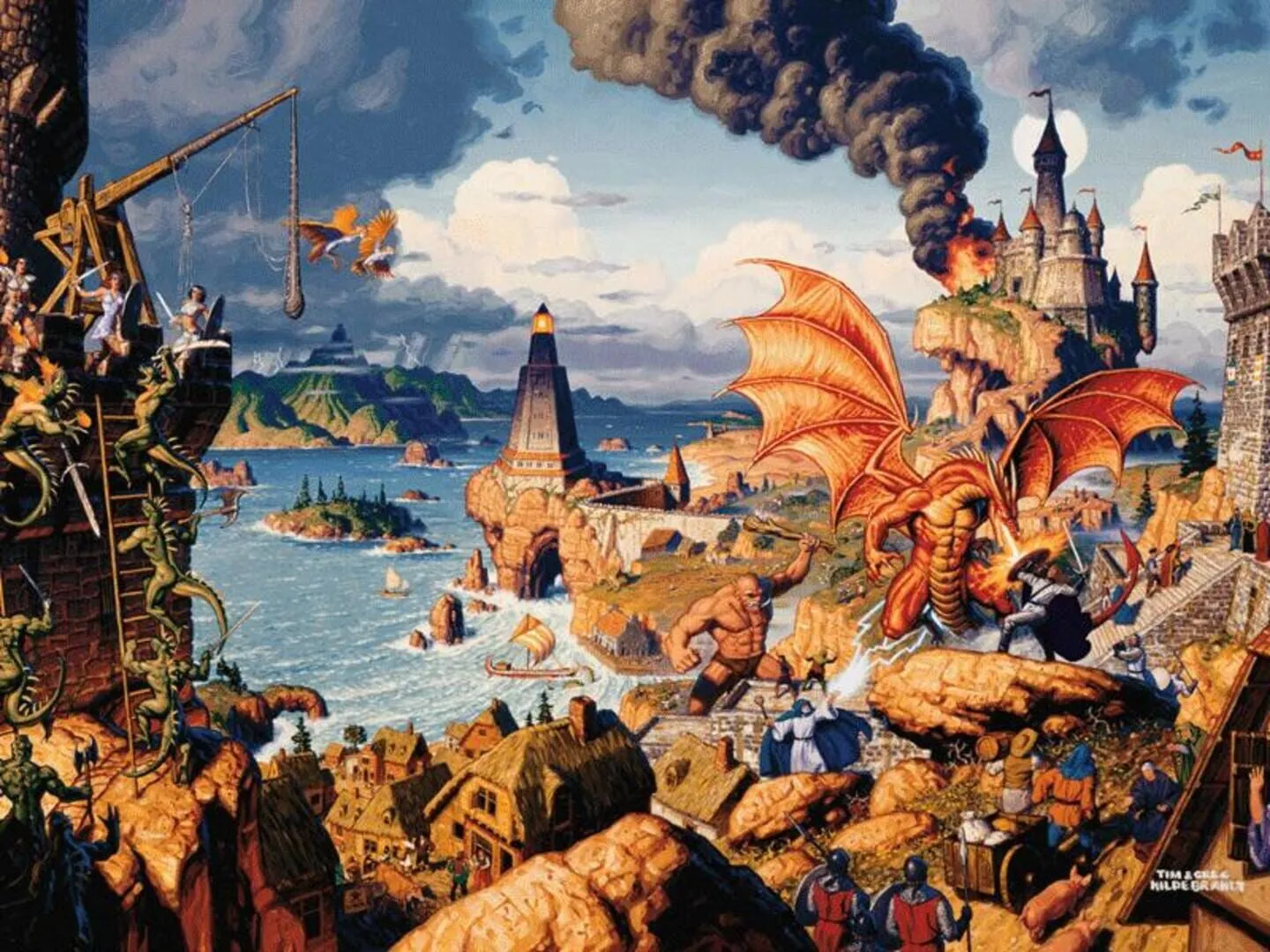
Ultima Online is the game that showed the world a persistent fantasy universe could work, and it remains the purest expression of what an MMORPG can be. There are no classes, no levels and no hand-holding. There is a world, a skill list and a crowd of other players who will make or break your day. Released on 24 September 1997, it was the first online RPG to pass 100,000 paying subscribers (it took about six months) and it peaked at around 250,000 in 2003. Everything the genre later copied, polished or quietly abandoned started here.
Be Anything You Want
The heart of Ultima Online is its skill-based character system. You do not pick a class. You raise the skills you actually use, and your character becomes whatever your habits make of it. Just look at the lives on offer:
- A thief lifting items from backpacks in plain sight.
- A mage burning enemies and summoning creatures, or an archer who never lets anyone close.
- A warrior in heavy armour holding the line.
- A blacksmith, carpenter or fisherman feeding the economy with real goods.
- An alchemist or scribe, supplying the potions and scrolls everyone else depends on.
- A tamer walking the countryside with a dragon at their heels.
- A merchant selling from a player-owned shop.
Many players ran two characters, one to earn gold and one to spend it. That sums up the design: crafters and traders are not side content, they are what keeps the world alive.
A World With Consequences
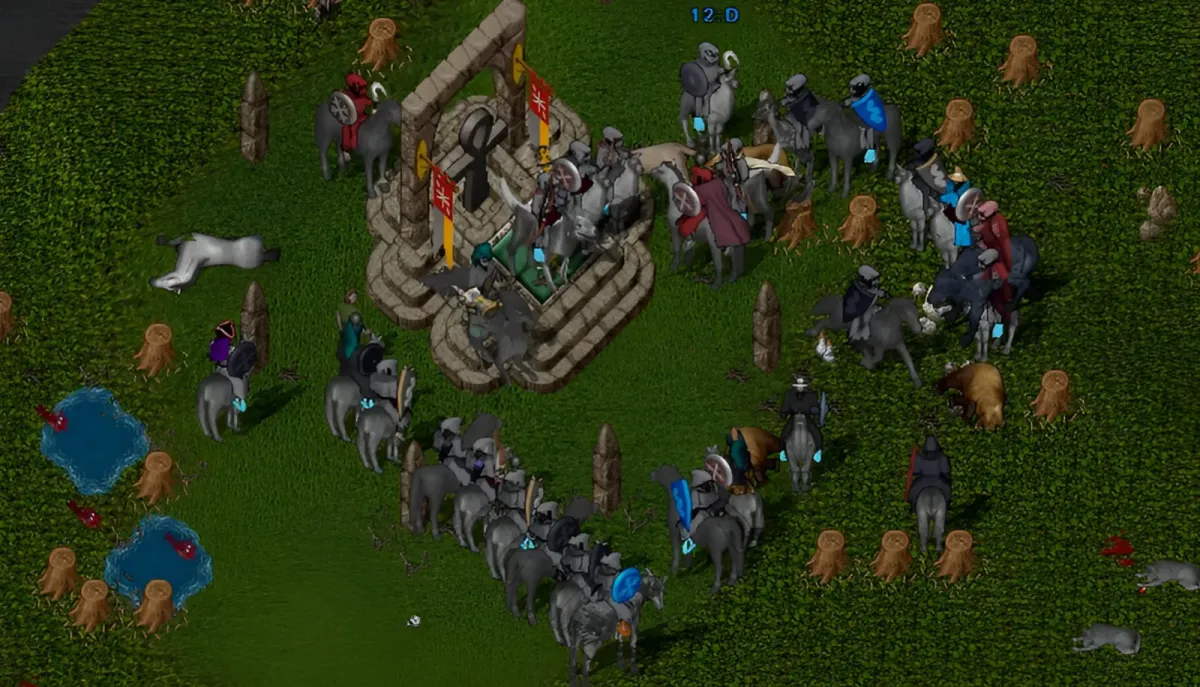
Ultima Online launched with almost no limits on player-versus-player combat. Anyone could attack anyone, anywhere, and the loser's corpse kept all their gear for the winner to loot. The game's answer was not a wall of rules but a system of reputation. Hurting innocents flagged you as a criminal and invited the town guards. Killing them stacked up murder counts, and at five your name turned red and the cities turned against you. Counts faded as you played, and killing a red could earn a bounty. Raph Koster, the lead designer, has explained that the idea was for players to police each other. The red players, naturally, learned to space out their kills and stay under the line.
For some players, being a PK was not a phase but a way of life. They lived to hunt other players, looting their corpses and getting rich on it, and a whole culture grew around the red name. There were even cities with no guards and no law, where PKs roamed free. Danger was always there, though, because a hunter who got careless could just as easily become the prey.
That gave the world a rhythm no modern MMO dares to copy. Cities were safe, and the wilderness was not. Every trip outside meant a quickening pulse, a choice between fight and flight, and the knowledge that guilds could declare war and make a whole region dangerous. You needed friends, and sooner or later you needed to be someone else's ally. It could be punishing, but it made every journey matter.
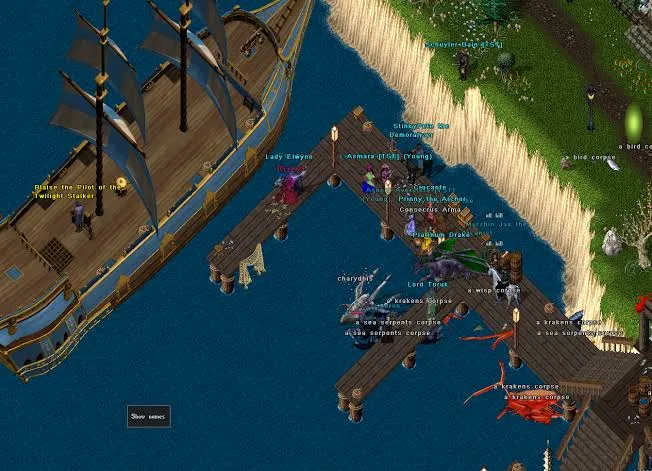
The price of that freedom was real. In May 2000 the Renaissance expansion split the world in two: Felucca kept the original rules, while Trammel allowed combat only by consent. Koster has said he would not have made that call himself, but that the player base doubled once it shipped. It saved a game that had been losing players to safer rivals, even if many veterans feel it cost Britannia a piece of its soul.
Houses, Ecosystems and Player Creativity
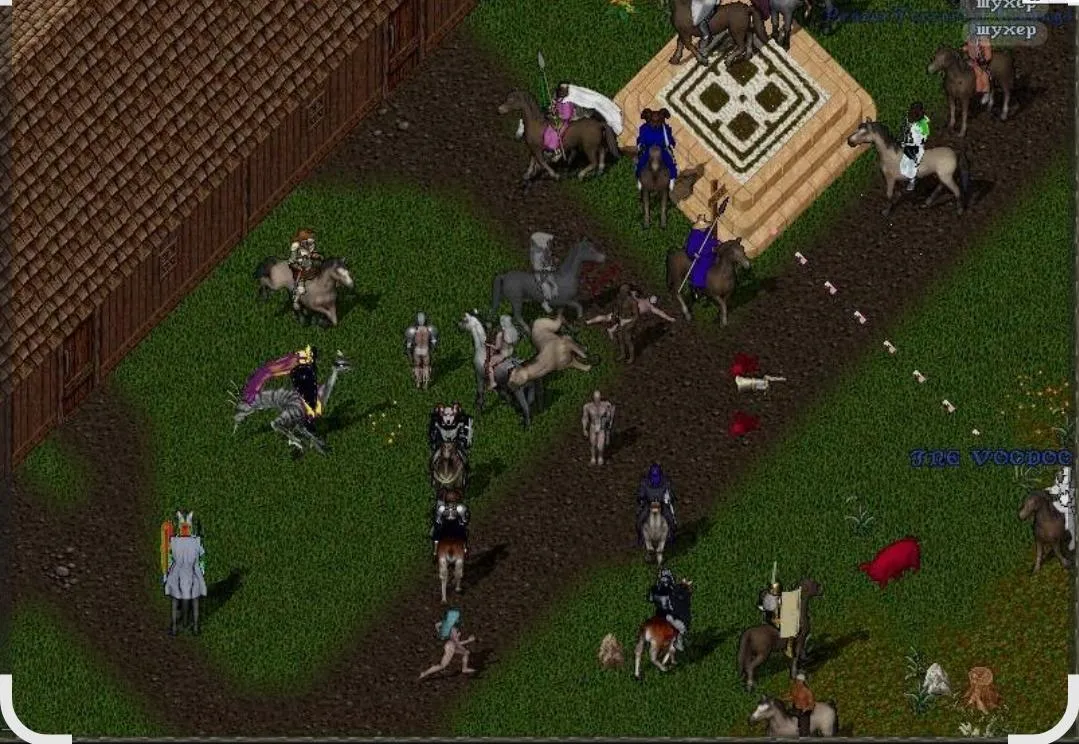
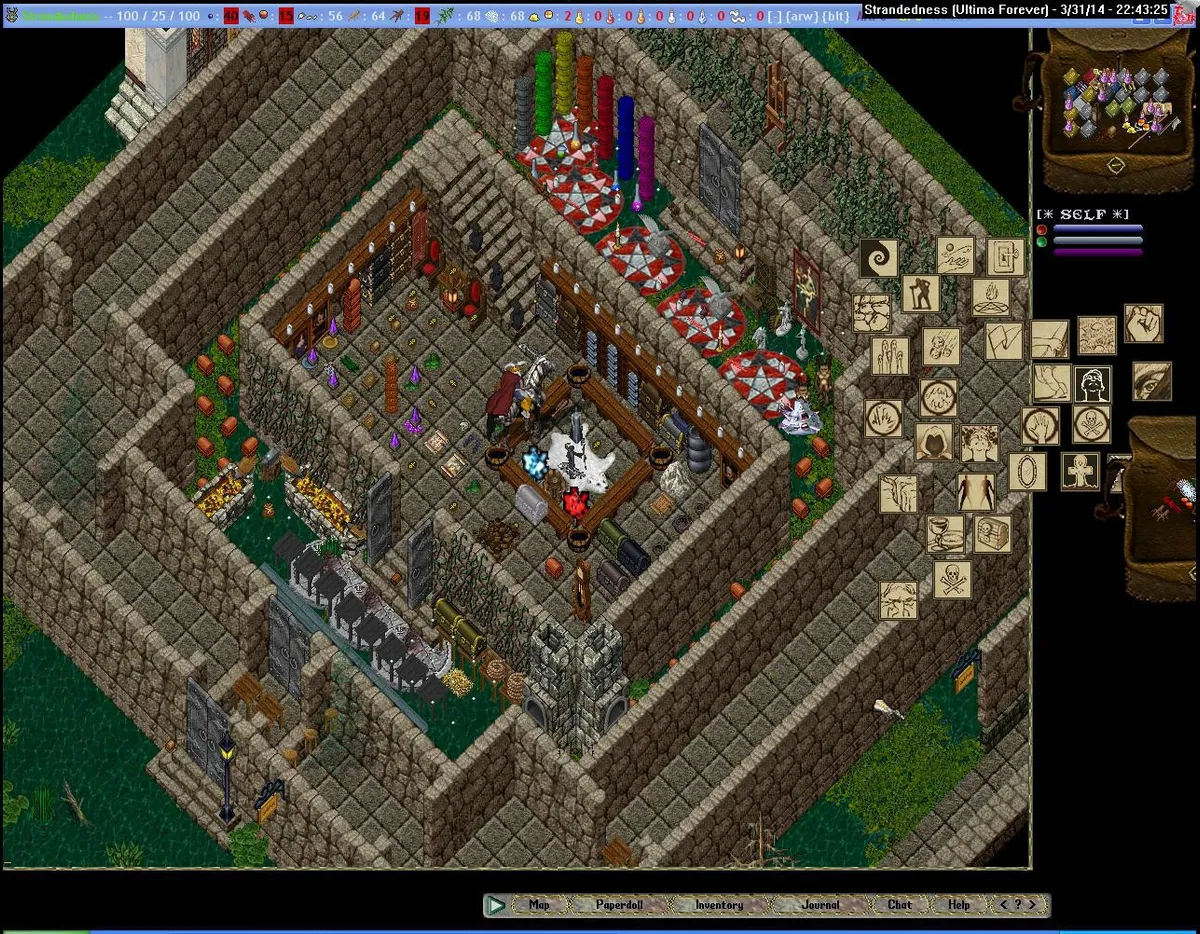
Player housing remains one of the game's greatest ideas. You could build almost anywhere there was open ground, and what you built was yours: a workshop, a log cabin, a marble villa, a tower, a keep or a castle covering 31 by 31 tiles. You could use it as a shop with hired vendors, as a fortress, or as the place you ran to when a fight went wrong. The Age of Shadows expansion in 2003 went further and let players design their own homes, up to three stories with a custom roof. Guilds turned castles into training grounds and war rooms.
The developers also tried something wildly ambitious for 1997: an artificial life engine in which animals hunted, fed and behaved like an ecosystem. According to Richard Garriott, players killed everything so quickly that the game could not respawn it, and most of that careful work went unnoticed. It is the most Ultima Online story imaginable, a clever system broken by a community that simply refused to follow the script.
The Team Behind Britannia
The game grew out of the Ultima series created by Richard Garriott, who played the in-game ruler Lord British. Garriott pitched the idea of a fantasy game shared by thousands of people, and development at Origin Systems began in 1995 on a budget of around $2.5 million. It was built by a small team that included Starr Long, Rick Delashmit, Scott Phillips and lead designer Raph Koster. It is worth remembering that Garriott supplied the vision and a team made it real.
The Day Lord British Died
No Ultima Online story is complete without the death of its creator. In August 1997, during the beta, Origin held a public event where Garriott appeared as Lord British, meant to be invulnerable, before a huge crowd of testers. A server crash shortly before had wiped his invulnerability flag. A player called Rainz, who had been picking pockets in the crowd, found a Fire Field scroll and cast it on the king, assuming nothing would happen. Lord British burned to death in front of everyone.
Rainz later said he stood frozen before bursting out laughing. Starr Long, playing Lord Blackthorn, summoned demons to punish the crowd, and the account was removed from the beta, though Origin said that was over earlier complaints. The ruler of the world had been assassinated by a thief with a scroll, and no other game has produced a better proof of what this one was about.
Ultima Online in 2026
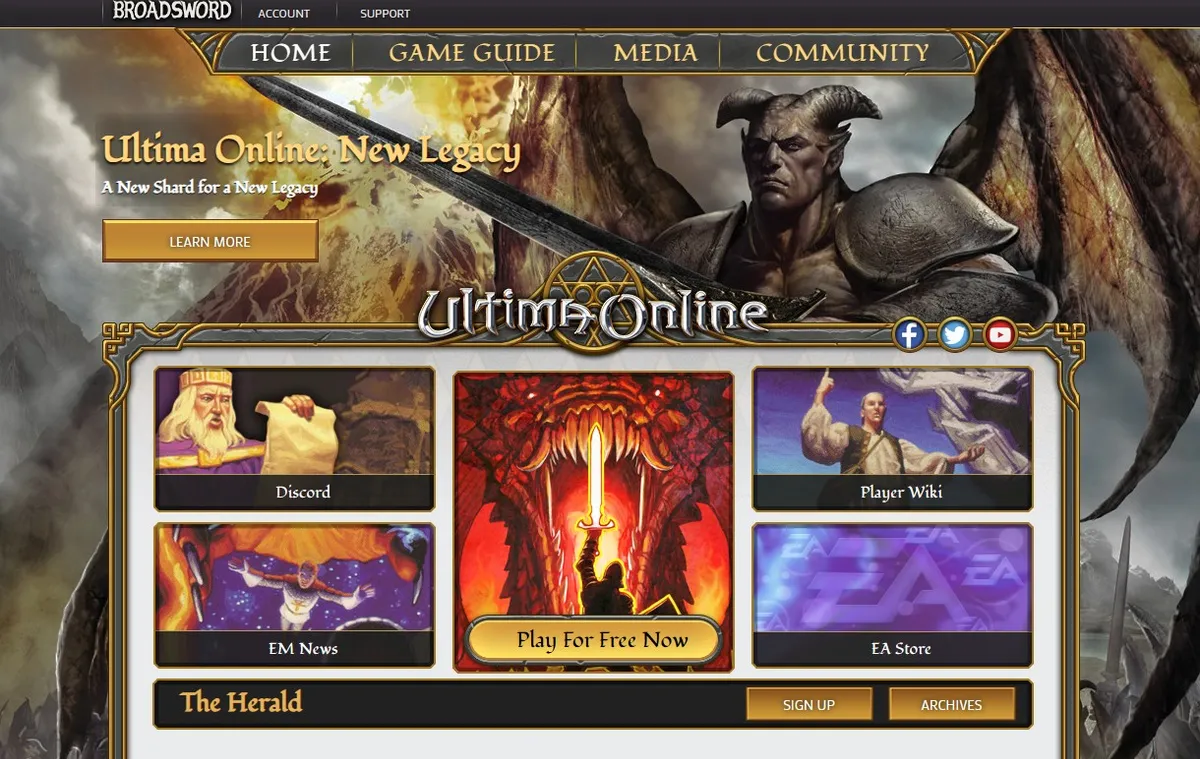
The remarkable thing is that Britannia never closed. As of 2026 the game runs on official servers operated by Broadsword, which has been the developer since 2014 (after Origin, EA and Mythic), with both an Enhanced Client and a Classic Client. A free-to-play route called Endless Journey lets newcomers try it, and a seasonal free shard called New Legacy launched in October 2024. A lively private server scene keeps the old rules alive for those who want the original experience. The community is a fraction of the 250,000 subscribers of 2003, but it is a devoted one, and it keeps logging in to a game that launched in 1997.
The wider Ultima story took a stranger turn. Ultima IX: Ascension in 1999 closed the series on a sour note, Garriott left EA, and his later projects, from Tabula Rasa to the Kickstarter-funded Shroud of the Avatar, never recaptured this magic. That only makes the original stand taller. Ultima Online was never the work of one man. It came from a team and a rare moment in time.
Why It Still Matters
Judged purely as a game, Ultima Online is still astonishing. Its freedom is greater than almost anything that followed, its economy is run by players rather than loot tables, and its tension between safety and danger gives every session a story. It asks more of you than modern MMOs do, and it gives back more. A newcomer will find the early hours unforgiving and the interface dated, but anyone who wants to know why people still speak about this world with such affection should visit Britannia at least once. It is the golden age of MMORPGs, and the golden age is still open for business.
 Add to Wishlist