

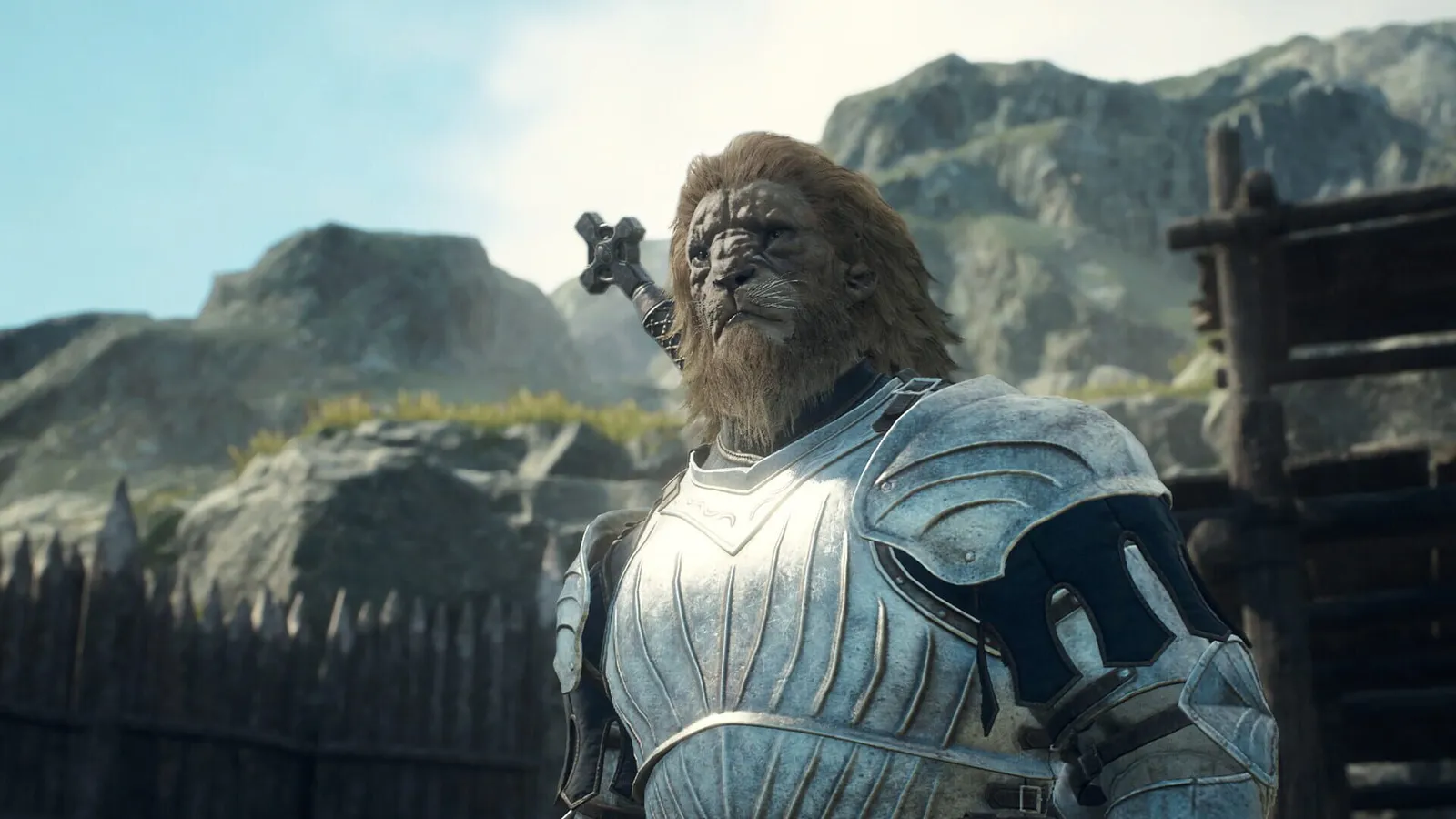
Dragon's Dogma 2 has a quality that is difficult to find in other fantasy RPGs. Its battles feel physical. Its monsters have weight and presence. Your companions fight alongside you like an actual party of adventurers, and a quiet journey can turn into a desperate fight without warning.
It is an interesting game with some excellent ideas. Unfortunately, those ideas are surrounded by an open world and a story that never managed to draw me in.
Capcom's action RPG follows the original Dragon's Dogma and brings back many of the ideas that made it stand out: large monsters, action-focused combat and a party of AI companions called Pawns. You play as the Arisen, a character whose heart has been taken by a dragon, and set out into a fantasy world full of creatures and conflict.
Combat with real weight
The best thing about Dragon's Dogma 2 is how its combat feels. Monsters do not seem like targets standing in front of you, waiting for you to press the right buttons. They feel like creatures occupying space, moving with weight and forcing you to react to them.
You can climb onto a large enemy and stab at it while trying to hold on. A fight against a huge creature becomes more than a matter of watching its health bar go down. You are dealing with its size, its movements and the danger of being thrown off while your party fights around you.
That physical connection makes encounters exciting in a way many action RPGs struggle to achieve. There is a sense of contact between your character and the monster, and it gives the combat an identity of its own.
Pawns make the adventure feel social
Your companions are a big part of what makes the game special. Pawns are controlled by the game, but they generally move and fight well, making them feel like useful members of a party rather than characters following you around.
You create your own main Pawn, who travels with you throughout your adventure. You can also recruit up to two additional Pawns, including ones created by other players. Other players can hire your main Pawn for their own journeys, too. It is your Pawn who visits their worlds, not your Arisen, and you are not playing together in real time.
It is a clever system. Building a party, seeing other players' creations and heading out together gives the game something of an MMORPG atmosphere, even though it is a single-player experience. At times, it made me wonder what this world would feel like if the other adventurers walking around were actual players.
The best moments happen on the road
The game's systems can produce some entertaining surprises. You might board an oxcart expecting a simple trip, only for a monster to attack along the way and force everyone into a fight. A creature can also cause trouble near a settlement, turning an ordinary visit into a chaotic encounter.
These moments show how much work went into making the different systems interact. The combat, the monsters, the Pawns and the world can come together in ways that feel spontaneous. When that happens, Dragon's Dogma 2 is easy to enjoy.
The problem is what happens between those moments.
An open world that struggles to feel alive
For all the excitement of its encounters, the open world itself left me cold. The cities have people in them, but they never felt alive or convincing enough to pull me into the setting. Outside them, I found the regions uninteresting to explore, with little that made me curious about what might be around the next corner.
As I explored, I often felt as though I was playing an MMORPG. The party of Pawns, the fantasy cities and the journeys between them all contribute to that feeling, even though this is a single-player game.
This is where the MMORPG comparison becomes a weakness. In an online game, a city can feel alive because other players fill it with movement and activity. Here, there are no other players sharing the world in real time, and the NPCs do not do enough to fill that space.
There are monsters to fight and places to visit, but I rarely felt immersed in the world around them. The journeys can be enjoyable because of what happens on the road, yet the places themselves did not give me much reason to care about discovering them.
A story that never pulled me in
The story was the other major disappointment. I tried to care about the journey and the people involved, but it never gave me a compelling reason to become invested. It did not spark my curiosity or make me eager to find out what would happen next.
The Arisen also felt bland to me. Creating your own character can be a great way to make an adventure feel personal, but here my character felt empty, which made it even harder to connect with the story.
A stronger narrative might have given the world more purpose. As it stands, neither the story nor the setting did enough to keep me engaged when I was not fighting something.
The launch microtransactions
There was also the microtransaction controversy at launch. Capcom sold various in-game items for real money, including a Portcrystal, which lets you place a fast-travel destination. That was a frustrating addition to a game that already made fast travel feel restrictive.
Fast travel was not locked behind a paywall, but that does not mean it was easy to use. At launch, movable Portcrystals were limited and had to be earned or found in the game. Ferrystones, the items used to travel to those destinations, were consumed on use and could be expensive to buy with in-game gold. Selling an extra Portcrystal while restricting fast travel in this way understandably frustrated players. Some PC players turned to mods that made these items more readily available.
Capcom added an Eternal Ferrystone and more Portcrystals through a free update, and the paid Portcrystal was among the items removed from sale in 2026. That does not make the launch decision any less questionable, but it is useful context for anyone considering the game after those changes.
An enjoyable game that leaves you wanting more
Dragon's Dogma 2 feels like a successful experiment in combat and party mechanics that needed a more engaging world around it. The monsters, Pawns and unexpected encounters give it a style of its own, but the lifeless setting and uninteresting story held it back for me.
It is not a bad game. There is real fun to be had if you enjoy action RPG combat and the idea of travelling with a party of companions. But it also left me with the feeling that something was missing. The foundations are there; I just wish the rest of the adventure had given me as much reason to care.
If you can find it for a good price, it is worth considering. Capcom also released a Dark Arisen expansion, though this review reflects the base game rather than an assessment of that expansion.
 Add to Wishlist