

Ultima Online launched on 24 September 1997. It was not the first online RPG, but it was the first to reach 100,000 paying subscribers (it got there within six months) and it peaked at around 250,000 in 2003. It proved that a shared fantasy world could be a business, and it is arguably the best MMORPG ever created. Which makes one question hard to shake: why did the people who built it never give us anything like it again?
Who Built It, and How
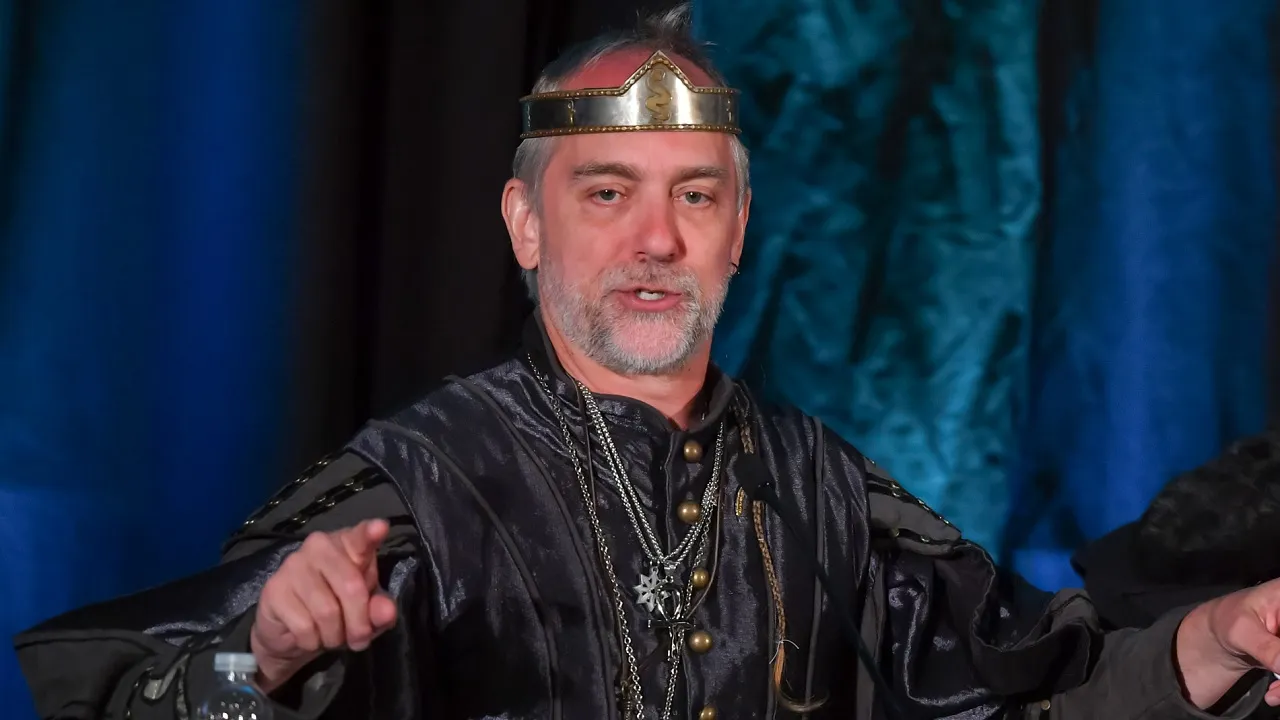
Ultima Online grew out of the Ultima series created by Richard Garriott, born in 1961 in Cambridge, England, the son of NASA astronaut Owen Garriott. Friends nicknamed him "Lord British" because he was born in the UK, and he took the name for his in-game persona. A former Dungeons & Dragons dungeon master and a Tolkien fan, he wrote Akalabeth in 1979 on an Apple II. Ultima IV (1985) was the turning point: a game built around the Eight Virtues and the Avatar, a hero judged on his actions rather than his kill count. Garriott and his family founded Origin Systems, which was sold to Electronic Arts in 1992 for $30 million.
Ultima Online came from a simple idea: a fantasy game involving several thousand people in a shared world. Garriott pitched it, development began in 1995 with a budget of around $2.5 million, and a small team made it real: Starr Long, Rick Delashmit, Scott Phillips and lead designer Raph Koster. It is worth remembering that it was a team effort, and that Garriott's role was the vision. That vision was bold. Origin even built an artificial life engine where animals hunted and fed on each other, only for players to kill everything faster than the game could respawn it.
Why It Was Unlike Anything Else
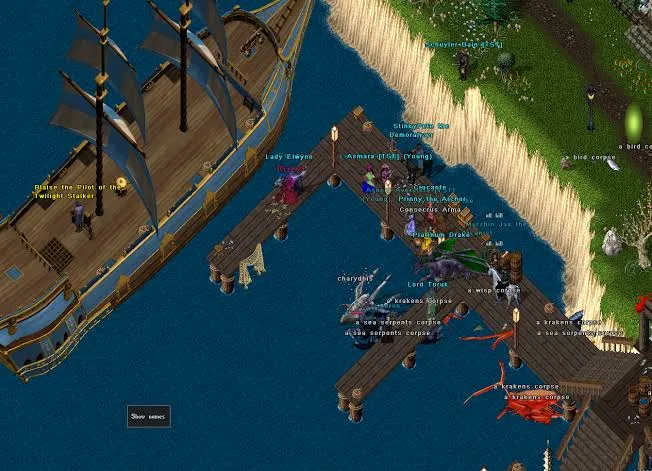
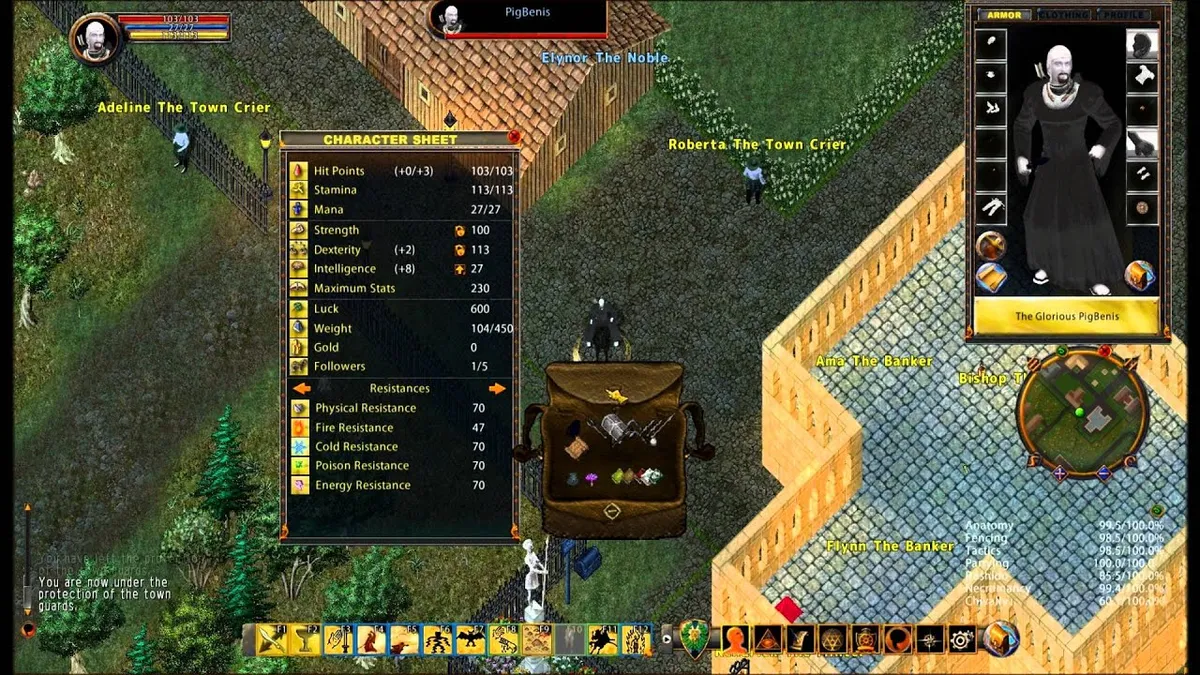
There were no classes and no levels. You built your character skill by skill, and you could be a thief, a mage, a warrior or an archer, but also a blacksmith, an alchemist, a tamer walking the land with a dragon at their side, or a merchant running a shop out of your own house. Many people kept two characters: a merchant to make money and a fighter to spend it. Player housing completed the picture. You could build almost anywhere there was open ground, from a small workshop to a 31 by 31 tile castle, and the Age of Shadows expansion (2003) even let players design their own homes.
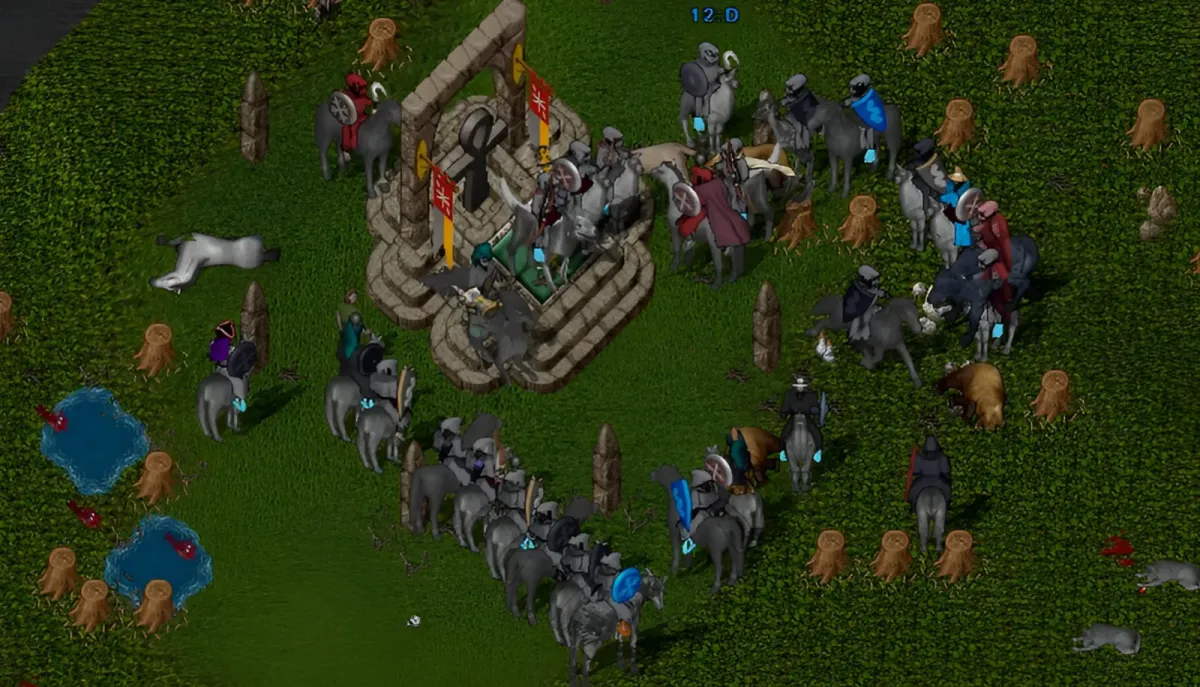
The PvP had almost no limits at launch. Anyone could attack anyone, and the loser's corpse kept everything they carried for the winner to loot. The answer was the PK (player killer) system, built on reputation rather than rules: attack an innocent and you became a criminal, kill innocents and at five murder counts your name turned red and the guards hunted you. As Raph Koster explained, Origin wanted players to police each other.
For some, being a PK became a way of life. They lived to hunt others, looting them and getting rich this way, and there were even cities with no guards and no law where PKs roamed free, though danger was always there. In the towns you felt secure. Outside, it was the unknown, and you needed friends and alliances to hold your back. That tension is exactly what no modern MMO dares to reproduce.
It also had a price. In May 2000, the Renaissance expansion split the world in two: Felucca kept the original rules, while Trammel allowed combat only by consent. Koster has said he would not have done it personally, but that the player base doubled once it went in. It helped save the game, even if many veterans believe it took away part of its soul.
The Game That Never Closed
The odd part is that Ultima Online is still here. As of 2026 it runs on official servers managed by Broadsword, the developer since 2014, with an Enhanced Client and a Classic Client. A free-to-play option called Endless Journey lets newcomers try it, a seasonal free shard called New Legacy launched in October 2024, and a busy private server scene keeps the old rules alive. The population is a shadow of the 250,000 subscribers of 2003, but a dedicated community still logs in to a game that launched in 1997.
That says something. People are hungry for a world like this, one without quest markers, where your reputation, your friends and your choices decide how your story goes. The genre moved toward safer, more guided designs, and the players who loved the original never found a replacement.
What Garriott Did Next
After Ultima Online, the story turns. Ultima IX: Ascension (1999) closed the series on a sour note, EA cancelled other projects, and Garriott left to found Destination Games, whose Tabula Rasa launched in 2007 and shut down in February 2009. He became a space tourist in 2008, flying to the International Space Station, and won a $28 million judgment against NCsoft in 2010 after being fired.
In 2013 he returned to the genre with a Kickstarter for Shroud of the Avatar, pitched as the spiritual successor to Ultima. It raised $1.9 million on Kickstarter and over $11.6 million in total by mid 2017, but backers grew impatient, development dragged, critics pointed to cut features and opaque finances, and the game released in 2018 to mixed reviews. This was the one project that could have answered the hunger, and it left many fans wondering if he could still deliver. In 2022 he announced Iron and Magic, a Web3 MMORPG, but it went quiet and its website had vanished by 2023.
The Fight for Ultima
In June 2026 it was reported that Garriott intends to reclaim the copyright to Ultima. A provision of US copyright law lets an original author terminate a grant of rights 35 years after it was made, and EA acquired the Ultima rights in 1992, so he believes the claim could be enforceable as early as 2027. There are limits: copyright is not trademark, EA keeps the Ultima name, termination rights do not cover works made for hire, and EA has not publicly responded. Garriott says he has tried to negotiate a revival with EA roughly once a decade, and that the publisher always showed interest before curtailing the discussion.
Where Is Lord British?
The man who gave us Ultima IV and Ultima Online has not made anything near as influential since 1997, while a whole audience has been waiting for a world like Britannia. But I would not write him off yet. Ultima Online was never the work of one man, it came from a team and a rare moment in time, and nothing says Garriott cannot assemble the same kind of team again. If the rights come back to him, we will finally find out whether the creator of Britannia still has a world left in him, or whether the best version of that world already exists, in a game from 1997 that stubbornly refuses to die.