Opinion

5 Legendary '90s Simulation Games That Still Hold Up Today

There is a particular kind of happiness in watching a tiny world get on with its day. A roller coaster climbs its first hill. A new neighbourhood fills with houses. Someone in a hospital corridor has a head that definitely should not be that large.

The best ’90s simulation games made ordinary decisions feel wonderfully absorbing. They gave us places to fuss over, little disasters to untangle, and excellent reasons to ignore the clock. These five still have that pull. The interfaces can show their age, but the pleasure of making a busy little world work has survived remarkably well.

Back to 1999

RollerCoaster Tycoon

RollerCoaster Tycoon box art
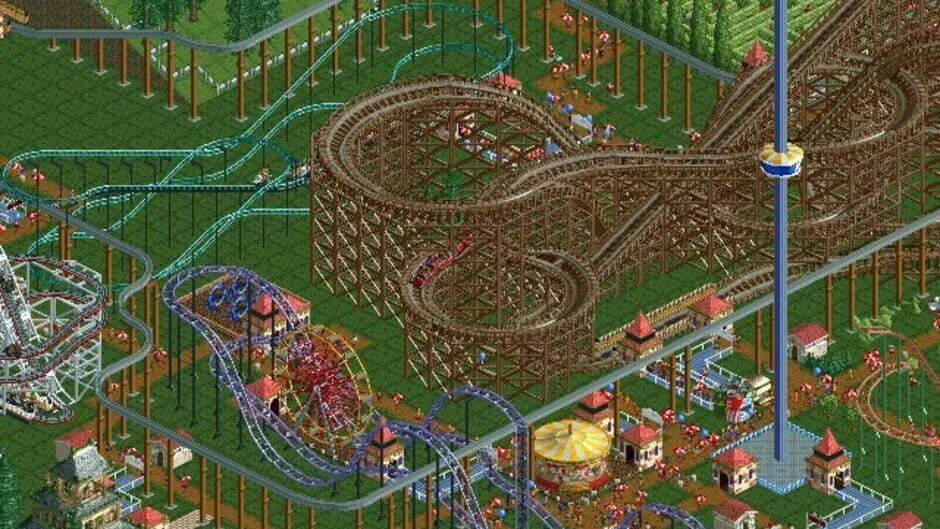
Wooden and steel roller coasters winding around a crowded park, with a tall observation ride.

Few games can make a queue, a maintenance bill and a patch of vomit feel like parts of the same compelling drama. RollerCoaster Tycoon does it by giving every ride and every guest a place in a park that feels alive. You build coasters, set prices, hire staff and discover that the magnificent entrance you spent ages decorating is not much use if nobody can find the toilets.

Released in 1999, it grew out of Chris Sawyer’s work on Transport Tycoon. This was a small creative operation: Sawyer handled the design and core programming, Simon Foster supplied the distinctive graphics, and Allister Brimble contributed music and sound. The sprites remain lovely because you can actually read what is happening, even when your park is a glorious mess.

The remarkable bit behind the rides

The programming story is true. In his own FAQ, Sawyer says the game was 99% x86 assembly, with a little C connecting it to Windows and DirectX. Assembly deals with very low-level instructions, so building a whole management simulation this way is an extraordinary feat of organisation. It also does not mean he made every part of the game alone.

What keeps it worth playing is the balance between invention and consequences. Your dream coaster still has to be one people want to ride. For the original game, look for the Deluxe edition, which includes its two expansions.

Game Details

Developer

Chris Sawyer Productions, Frontier Developments

Publisher

Atari, Inc., Hasbro Interactive, MicroProse Software, Inc.

Release year

1999

Game metadata provided by IGDB

Back to 1999

SimCity 3000

SimCity 3000 box art
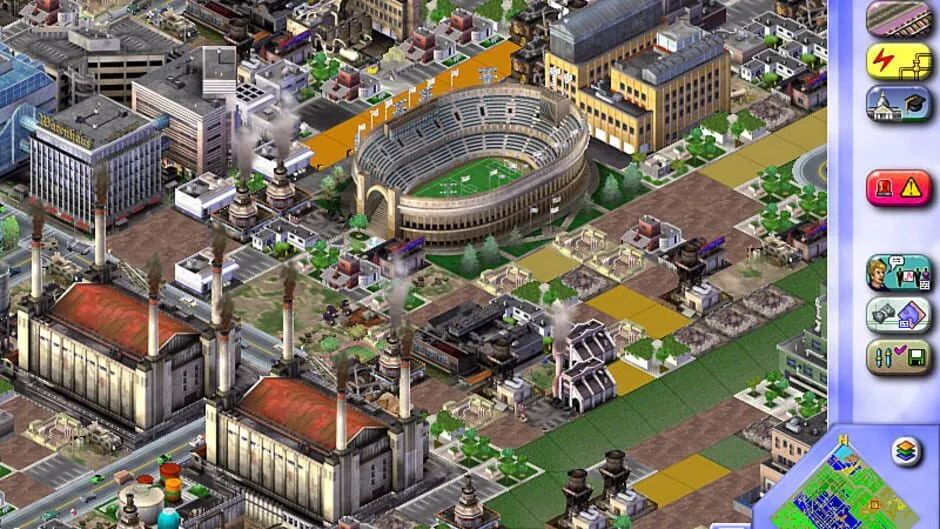
An isometric city district with a large stadium, factories, roads and residential blocks.

There is something deeply comforting about SimCity 3000’s combination of busy streets, handsome buildings and a soundtrack that makes civic administration sound like a very good evening out. Then the rubbish piles up, your finances wobble, and that comfortable little city becomes an extremely demanding hobby.

Maxis released the original in 1999, building on the series created by Will Wright. Its roots are wonderfully revealing: Wright experimented with a city-building editor connected to his helicopter game Raid on Bungeling Bay, and the act of creating the place became an attraction in itself. That history helps explain why laying out a city can be satisfying long before it makes you any money.

You zone land, connect roads and utilities, balance services against taxes, and negotiate with neighbouring cities. A city is never just a picture you are painting. Every attractive district comes with needs, and fixing one problem can quietly create another.

Disasters are a big part of the appeal, too. Fires, earthquakes, tornadoes and even UFO attacks can wreck your careful planning. You can trigger them yourself, send firefighters to tackle a blaze, or turn disasters off for a quieter game. Saving your city before deliberately unleashing a catastrophe is a very particular kind of SimCity fun.

That is why it still holds up. Its readable isometric view makes growth feel tangible, while its systems leave plenty to learn. The version to look for is SimCity 3000 Unlimited, the expanded edition released in 2000. The game on this list is the 1999 original; Unlimited is the fuller way to revisit it.

Game Details

Developer

Maxis

Publisher

Electronic Arts

Release year

1999

Game metadata provided by IGDB

Back to 1997

Theme Hospital

Theme Hospital box art
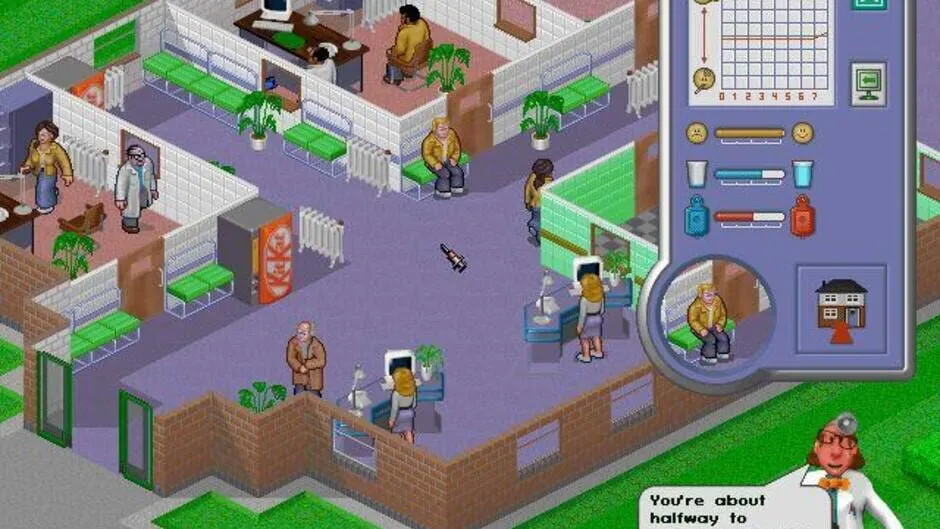
Patients and doctors in a hospital with green benches, treatment rooms and a patient information window.

Theme Hospital turns a waiting room into a comedy stage. Patients shuffle between rooms with impossible ailments, doctors need better training, and the receptionist’s announcements make a deteriorating situation sound almost respectable. It has the peculiar warmth of a game that enjoys watching your carefully arranged plans fall apart.

Bullfrog Productions released it in 1997. The British studio had made a name for itself with inventive games such as Populous and Syndicate, and brought that experimental spirit to the wonderfully unlikely business of hospital administration. You place rooms, hire and train staff, manage queues and keep treatments moving while trying to make the accounts add up.

When a ridiculous cure found the tone

According to developers Gary Carr and Mark Webley, a demonstration of the Bloaty Head cure made their colleagues burst out laughing. Popping and reinflating a patient’s oversized head helped convince the team to embrace invented illnesses and absurd treatments. The humour was doing real design work: you could understand a room’s purpose almost at a glance.

The queues and staffing decisions are still an excellent puzzle. For a more comfortable modern setup, CorsixTH reimplements the engine and adds features such as higher resolutions. You still need the original game’s data.

If you want this kind of silliness in a newer game, Two Point Hospital is its spiritual successor. Two Point Studios brought together veterans including Carr and Webley, with SEGA publishing the game in 2018. It carries that love of peculiar illnesses into a new hospital-management game. You can find it at WinGameStore.

Game Details

Developer

Bullfrog Productions

Publisher

Electronic Arts

Release year

1997

Game metadata provided by IGDB

Back to 1994

Theme Park

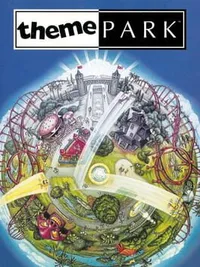
Theme Park box art
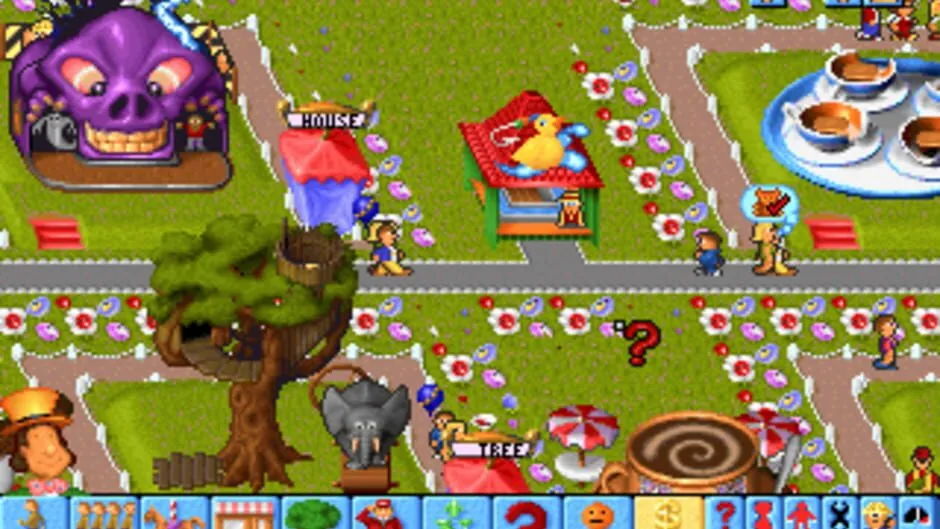
Colourful park paths lined with flowers, food stalls, a haunted attraction and a spinning ride.

Before RollerCoaster Tycoon had us calculating the perfect drop, Theme Park was inviting us to run a cheerful little business full of screaming customers. Its big characters, bright rides and bustling paths capture the slightly grubby magic of a real amusement park. Everything looks friendly. Everything also costs money.

Bullfrog’s 1994 game put Peter Molyneux’s taste for interlocking systems into an immediately inviting setting. Rides need maintaining, shops need supplies, staff want paying, and research promises more elaborate ways to separate visitors from their spending money. It is particularly good at making a seemingly minor business decision ripple through the park.

A teenager behind the crowds

One of its co-creators was Demis Hassabis. The Royal Society’s biography notes that he coded Theme Park at 17, long before co-founding DeepMind. That is a rather good story to remember while watching the tiny visitors decide what to do next.

The menus and controls demand more patience than a modern management game. Even so, its humour and compact business simulation give it a distinct personality. Where RollerCoaster Tycoon invites you to become a ride designer, Theme Park encourages your inner mischievous manager.

Game Details

Developer

Bullfrog Productions

Publisher

Domark Software, Electronic Arts, Electronic Arts Victor, Guildhall Leisure Services Ltd., Ocean

Release year

1994

Game metadata provided by IGDB

Back to 1996

SimPark

SimPark box art
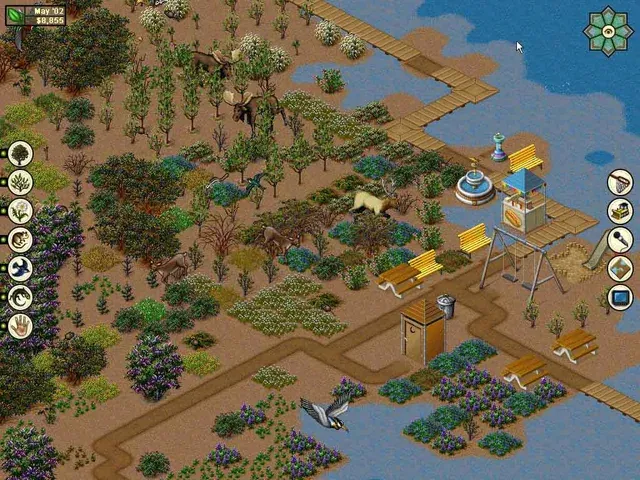
SimPark nature park with trees, wildlife, flower beds and paths beside a lake.

SimPark has that unmistakable mid-’90s CD-ROM charm: colourful wildlife, a landscape to fill, and a cartoon frog who is extremely keen to help. You plant trees, introduce animals and build a nature park, then discover that keeping everything alive requires more thought than simply picking your favourite creatures.

Released by Maxis in 1996, it came from the studio’s educational side. The credits name Roxana Wolosenko and Claire Curtin as its designers. Maxis had already made city planning absorbing with SimCity; here, the subject was the relationship between a habitat and the things living in it. Plants need suitable conditions, animals need food, and visitors bring their own demands.

The frog who could interview a tree

Rizzo is more than a chirpy adviser. As Maxis’s original teacher’s guide explains, the microphone tool lets him interview plants and animals about how they are doing. It is a wonderfully odd way to make an ecosystem readable: your struggling greenery can effectively tell you what is wrong. The field guide and population records give you more information when the frog’s advice is not enough.

It was built for younger players, so the simulation is gentler than the other games here. That is part of its appeal. Working out why a species is struggling, trying a different mix of wildlife and watching the park respond still makes for a pleasant afternoon of tinkering.

It's available for free download on various sites; just Google it. If you want a copy for your collection, you can buy a physical version on Amazon or eBay.

Game Details

Developer

Maxis

Publisher

Maxis

Release year

1996

Game metadata provided by IGDB

Join the Herd on Discord!

Talk builds, find your squad and catch deals before they post here.

Join Now