

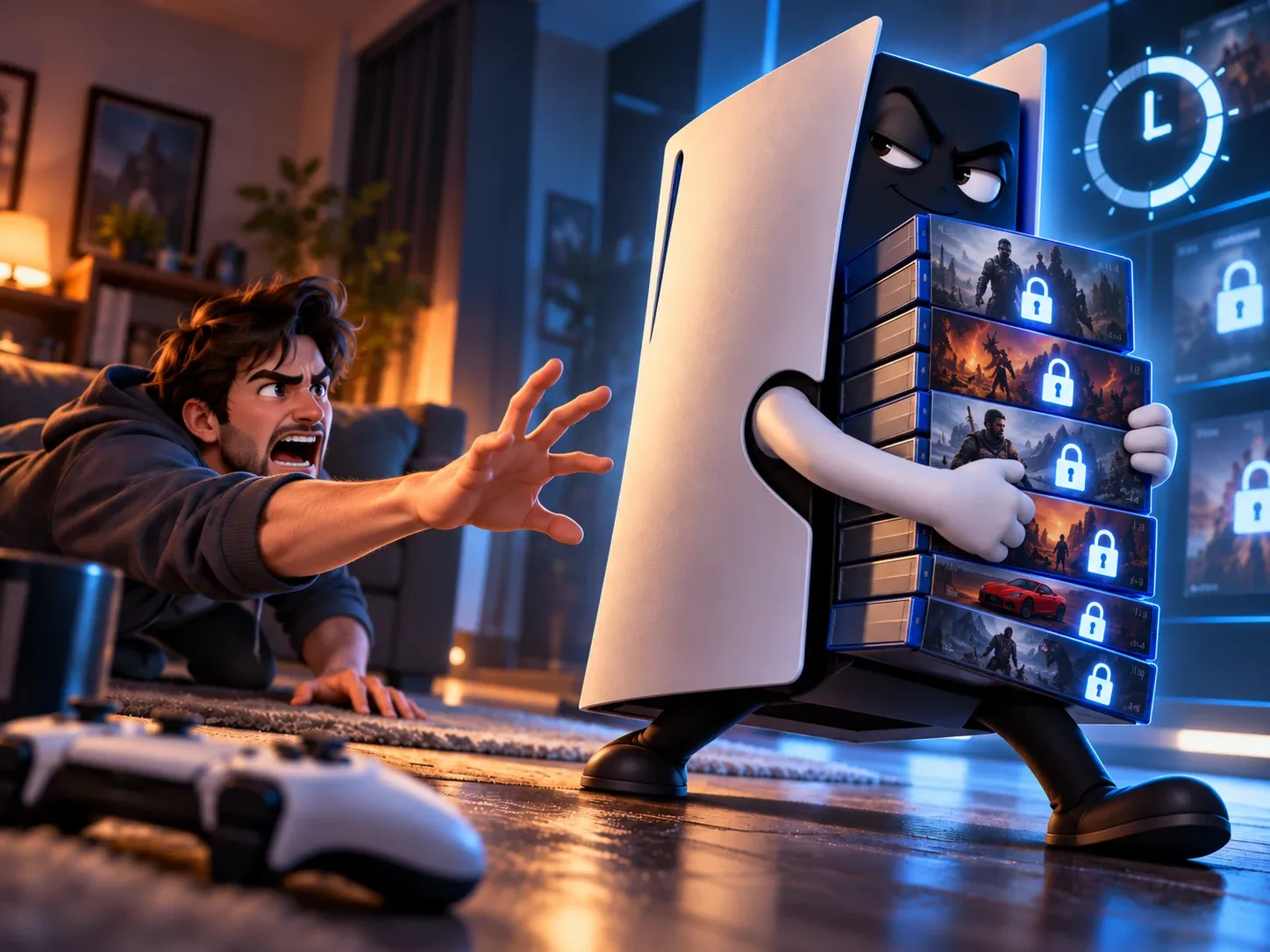
In April 2026, PlayStation players discovered something unsettling: newly purchased digital games were displaying 30-day license validation timers. Some tests even showed games becoming inaccessible offline after resetting a console's internal clock.
Naturally, the gaming community wasn't thrilled.
Sony eventually clarified to GameSpot that the system requires a one-time online verification, after which no further checks are necessary.
Fair enough. But the controversy exposed a much bigger problem.
You Paid for It. Do You Own It?
According to PlayStation's own terms, buying a digital game gives you a license to use it. You don't actually own the software.
And that distinction matters.
Remember The Crew? Ubisoft shut down its servers on March 31, 2024, rendering the game unplayable, including for people who had purchased physical copies.
Imagine buying a car and discovering that the manufacturer can remotely disable its engine whenever it decides the model is too old.
Sounds ridiculous? Somehow, in gaming, we're expected to accept something remarkably similar.
It's Time for Some Rules
The European Stop Destroying Videogames initiative gathered over 1.29 million verified signatures demanding stronger protections.
Yet in June 2026, the European Commission declined to propose a legal obligation requiring publishers to keep games playable after commercial support ends. Instead, it proposed discussions toward an industry code of conduct.
That's a pretty disappointing answer for the herd.
We believe the rules should be simple. If a game can function offline, purchasing it should guarantee continued offline access. For online-only games, publishers should clearly disclose the limitations and have a reasonable end-of-life plan. Players deserve meaningful consumer protections when paid access disappears.
Nobody is asking publishers to maintain multiplayer servers forever. We're asking them to respect the money players have already spent.
A purchase should come with lasting rights, regardless of whether the product comes on a disc or through a download.
The industry has had plenty of time to figure this out. If publishers won't guarantee those rights themselves, regulators need to step in.
The herd shouldn't have to fight to keep what it bought.